
PES-31 Hydrocarbon Bioremediation Application
Soil and Groundwater Remediation for Petroleum-Contaminated Sites
Soil and groundwater remediation for petroleum-contaminated sites often involves diesel, crude oil, waste oil, jet fuel, or related hydrocarbons in more than one treatment zone. PES-31 supports field bioremediation programs by adding hydrocarbon-digesting microbial activity where soil contact, oxygen, moisture, nutrients, pH, and monitoring can be managed. For teams evaluating petroleum contaminated soil remediation options, PES-31 fits projects where biological treatment can be integrated into practical field cleanup methods.
What Is Soil and Groundwater Remediation for Petroleum-Contaminated Sites?
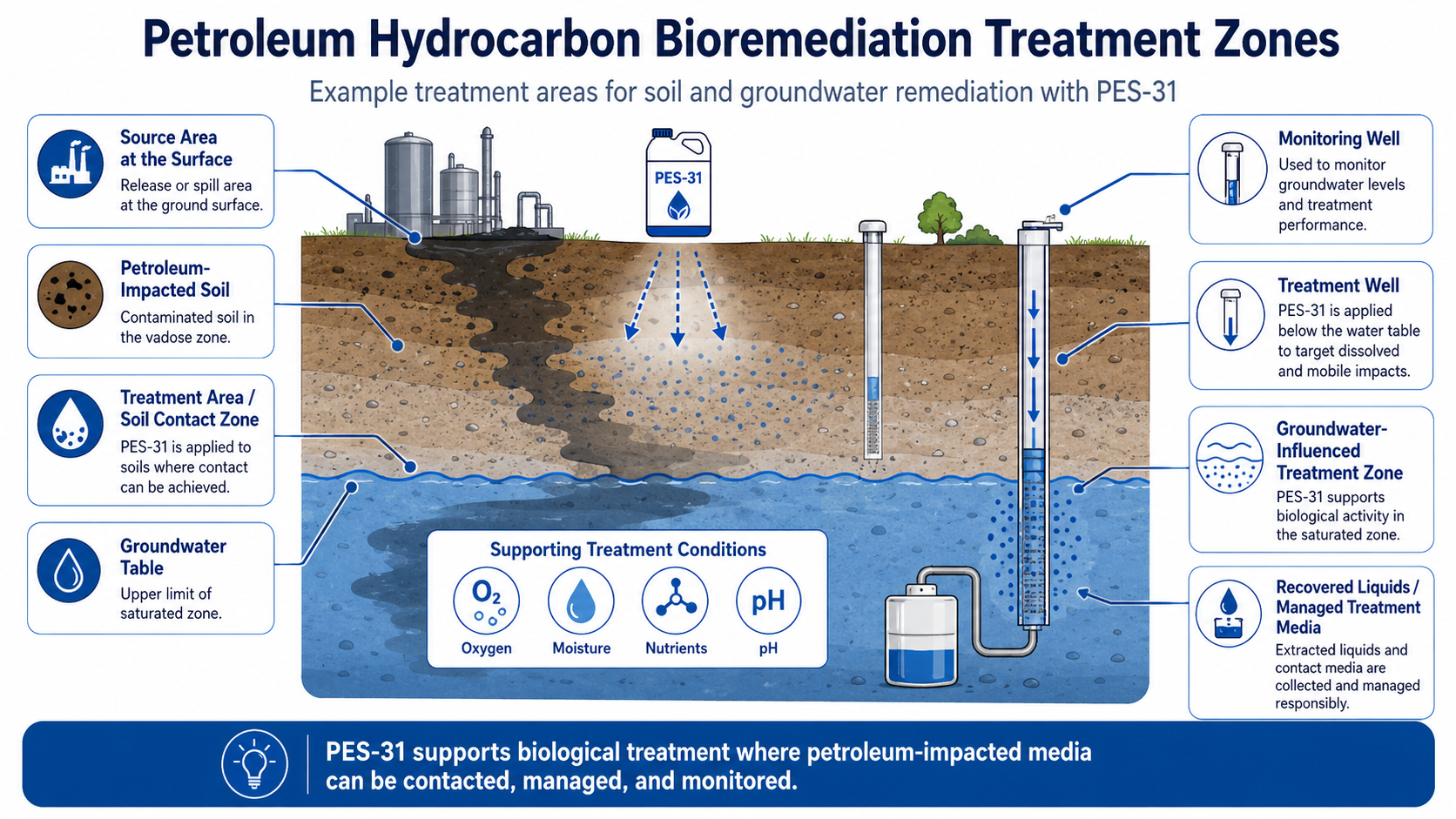
Soil and groundwater remediation is the process of treating or managing impacted soil, groundwater-related media, recovered liquids, or treatment zones affected by petroleum hydrocarbons. Petroleum contaminated soil remediation may involve excavation, landfarming, treatment cells, soil working, recovery wells, treatment wells, or biological treatment. PES-31 is evaluated as part of a field bioremediation strategy where hydrocarbon-impacted media can be contacted and maintained under conditions that support microbial activity.
Why Subsurface Hydrocarbon Cleanup Gets Complex
Hydrocarbon contamination below the surface is rarely uniform. Petroleum impacts can vary by depth, soil type, moisture level, oxygen availability, contaminant type, and groundwater movement. Cleanup becomes more challenging when contamination has migrated, when the site must remain active, or when treatment has to continue over time instead of being handled as a one-time excavation or washdown event.
Where PES-31 Fits
PES-31 is a hydrocarbon-digesting bioremediation product used in field programs where petroleum-contaminated soil, water, recovered liquids, slurries, or related treatment media can be managed biologically. It does not replace site characterization, containment, sampling, regulatory approvals, or engineering controls. Instead, PES-31 supports the biological portion of a remediation plan by adding microbial activity under conditions that allow treatment to progress.
How PES-31 Supports Soil and Groundwater Remediation
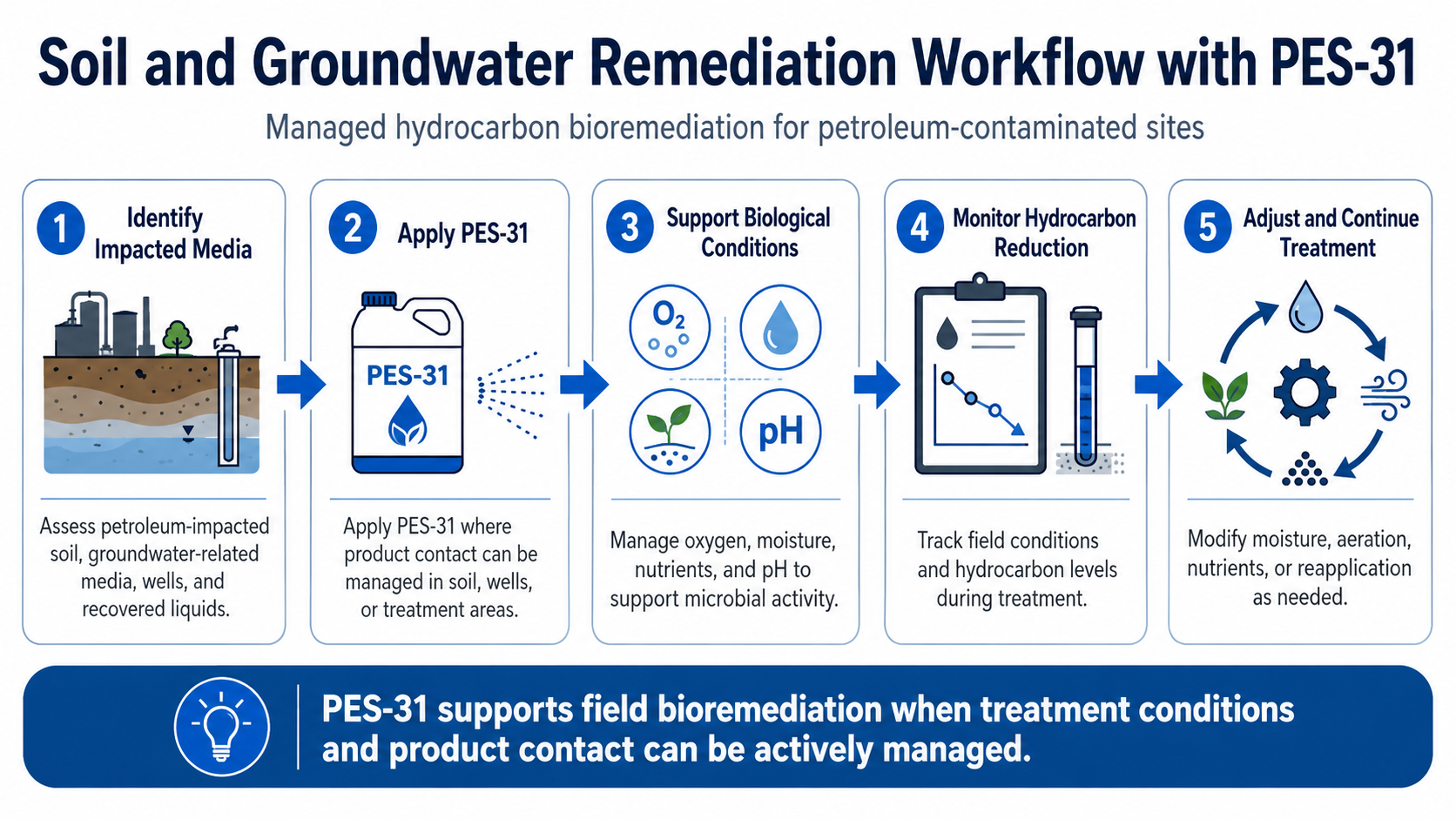
Identify impacted media and treatment approach
Site teams identify petroleum-impacted soil, groundwater-related media, recovered liquids, treatment wells, or other zones where biological treatment may fit the cleanup plan. Sampling and field observations help determine whether PES-31 can be distributed and maintained effectively.
Apply PES-31 where contact can be managed
PES-31 is mixed thoroughly before use and may be applied directly or diluted with water to improve distribution. Application methods depend on the remediation design, access, media type, moisture conditions, and whether treatment involves soil, wells, recovered liquids, slurries, or managed treatment areas.
Maintain conditions and monitor progress
Biological remediation performs best when oxygen, moisture, nutrients, pH, product contact, and hydrocarbon levels are monitored over time. Field teams may adjust moisture, nutrients, aeration, or reapplication based on site response and remediation goals.
Supported Soil and Groundwater Remediation Applications
PES-31 may be evaluated for soil and groundwater remediation programs where petroleum hydrocarbon impacts can be addressed through managed biological field conditions.
- Petroleum contaminated soil remediation
- Petroleum-contaminated soil remediation
- Hydrocarbon contaminated soil remediation
- Hydrocarbon soil remediation
- Diesel contaminated soil remediation
- Crude oil impacted soil treatment
- Waste oil site cleanup
- Jet fuel contaminated soil or groundwater-related treatment
- Soil stockpile or treatment-cell bioremediation
- Treatment well support where biological contact can be managed
- Recovered water or recovered liquid treatment where appropriate
- Production pit, excavation, or subsurface petroleum remediation programs
- Landfarming or soil-working programs for accessible contaminated soil
- Long-duration site remediation programs with sampling and adjustment
Why Teams Evaluate PES-31 for Petroleum Site Cleanup
- Targets petroleum hydrocarbon contamination with a biological treatment approach
- Fits soil, water, recovered liquids, slurries, and related treatment media when conditions allow
- Can be integrated with field remediation methods such as soil working, moisture management, treatment wells, and recovered-liquid handling
- Supports active management through oxygen, nutrients, moisture, pH, product contact, and monitoring
- Can help reduce reliance on excavation-and-disposal-only approaches when bioremediation is appropriate
- Connects with PES-31 case histories and technical documentation for field-use context
Soil and Groundwater Remediation FAQ
What is soil and groundwater remediation?
Soil and groundwater remediation is the treatment or management of soil, groundwater-related media, recovered liquids, or treatment zones affected by contaminants. For petroleum sites, this may involve diesel, crude oil, waste oil, jet fuel, or related hydrocarbon impacts.
Can PES-31 be used for petroleum contaminated soil remediation?
Yes. PES-31 may be evaluated for petroleum contaminated soil remediation when biological treatment is appropriate and field conditions allow product contact, oxygen, moisture, nutrients, pH, and monitoring to be managed.
Can PES-31 be used when groundwater is part of the site problem?
PES-31 may be evaluated for remediation programs where groundwater-related treatment activities are part of the broader site strategy, especially when petroleum impacts affect soil, recovered liquids, treatment wells, or other media that can be contacted and managed biologically.
What treatment conditions matter most for PES-31 bioremediation?
Oxygen, moisture, nutrients, suitable pH, product contact, and monitoring all matter. PES-31 works best as part of an actively managed remediation program rather than a passive or one-time treatment step.
Review PES-31 Technical Information
Review PES technical documents and case histories for field examples, product guidance, and supporting information related to PES-31 soil, water, and hydrocarbon bioremediation applications.