
Hydrocarbon Remediation Technologies for Petroleum-Contaminated Soil, Water, and Oil Spill Cleanup
Petroleum hydrocarbon contamination affects soil, groundwater, wastewater, industrial facilities, transportation infrastructure, and marine environments. Treatment strategies vary depending on contaminant type, environmental conditions, recovery objectives, and regulatory requirements.
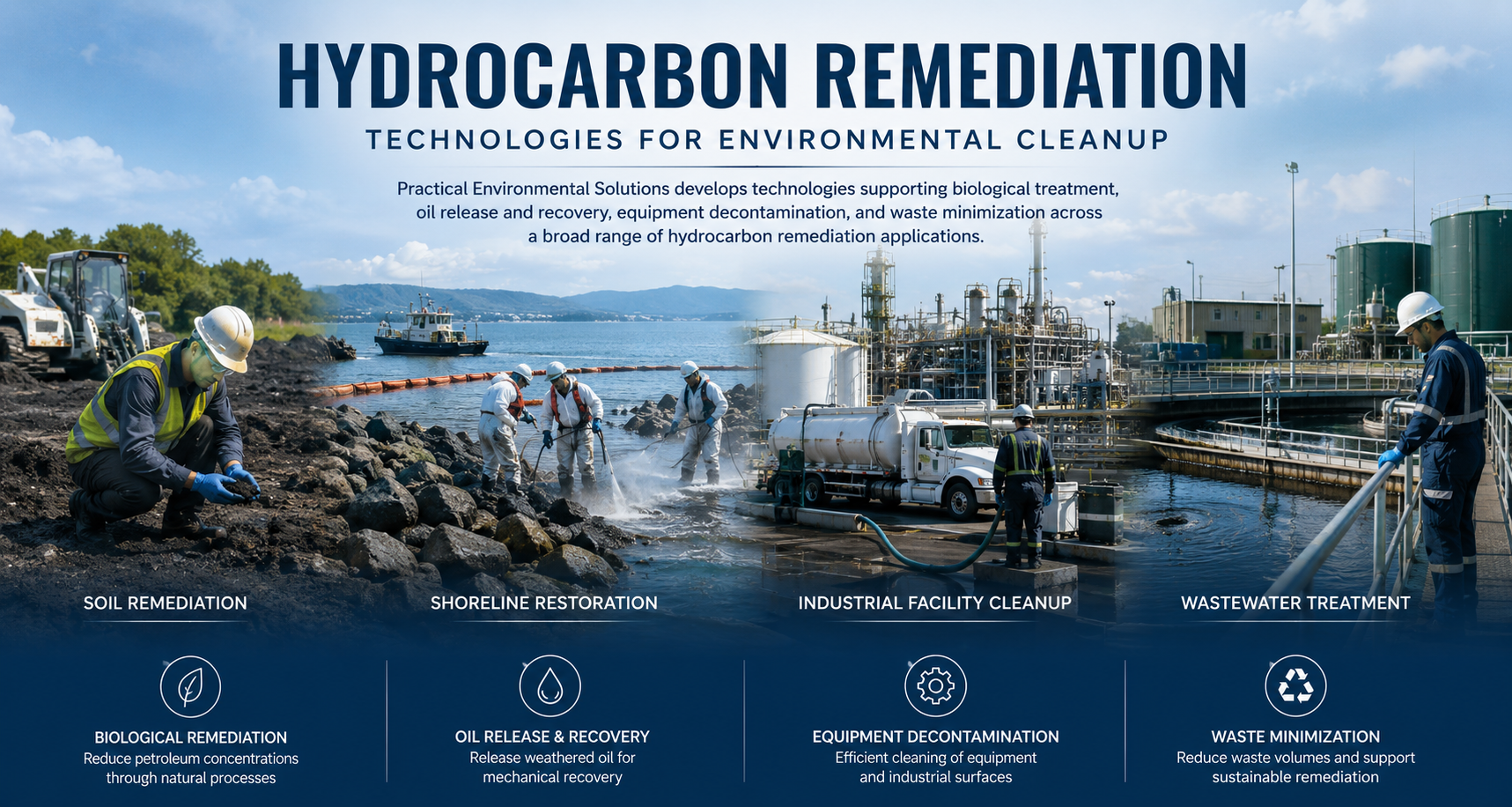
Practical Environmental Solutions develops remediation technologies supporting biological treatment, oil release and recovery, equipment decontamination, and waste minimization across a broad range of hydrocarbon remediation and petroleum remediation applications.
Practical Environmental Solutions has supported hydrocarbon remediation projects for decades through technologies used in biological remediation, oil recovery, equipment decontamination, and documented field applications.
Understanding Hydrocarbon Remediation
Petroleum hydrocarbon contamination can affect a wide range of environments, including soil, groundwater, sediments, wastewater, industrial facilities, transportation infrastructure, and marine shorelines. The characteristics of the contamination—including petroleum type, degree of weathering, affected media, and environmental setting—influence the selection of appropriate remediation methods.
Hydrocarbon remediation encompasses a variety of treatment strategies designed to reduce environmental impacts while supporting project-specific cleanup objectives. Depending on site conditions, remediation may involve biological degradation of petroleum hydrocarbons, mechanical recovery of free product, excavation and disposal, containment, washing or separation processes, or combinations of these approaches.
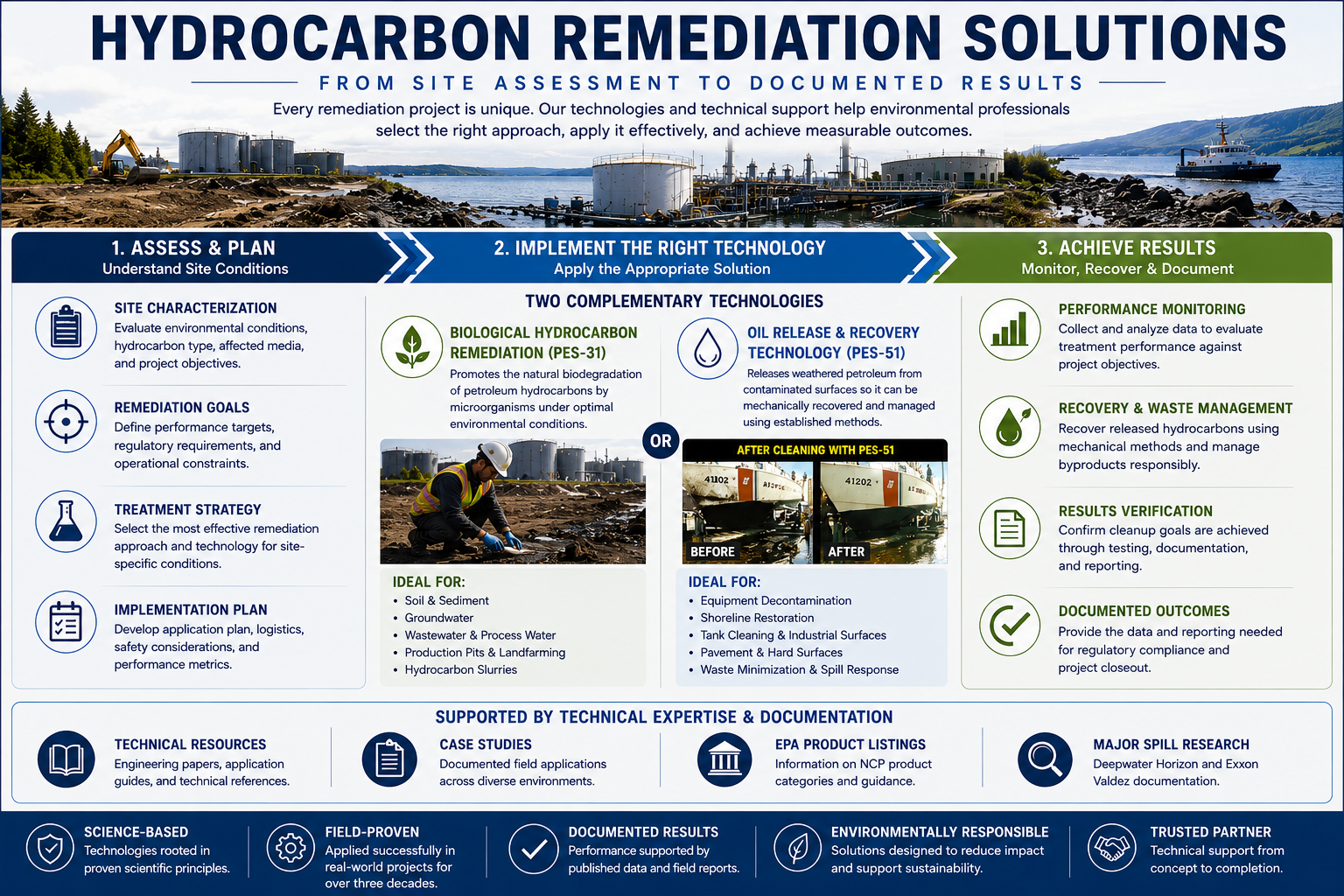
Two treatment strategies are particularly applicable to many petroleum contamination projects. Biological hydrocarbon remediation promotes the natural degradation of petroleum compounds by microorganisms under favorable environmental conditions. Oil release and recovery technologies assist in separating weathered petroleum from contaminated surfaces so recovered hydrocarbons can be mechanically contained, collected, and managed using established recovery methods.
Practical Environmental Solutions develops technologies supporting both remediation approaches. The following overview organizes hydrocarbon remediation by treatment objective, providing a starting point for exploring technologies, applications, documented field projects, and supporting technical resources.
Find the Right Remediation Approach
Environmental remediation projects typically begin with a cleanup objective rather than a product selection. Factors such as contaminant condition, affected media, environmental sensitivity, and recovery requirements influence the treatment approach selected for a particular project.
Biological Hydrocarbon Remediation
Biological remediation is commonly applied when petroleum hydrocarbons can be reduced through naturally occurring microbial activity. Under suitable environmental conditions—including appropriate oxygen availability, moisture, nutrients, and pH—microorganisms metabolize hydrocarbon compounds, reducing contaminant concentrations over time.
- Petroleum-contaminated soil
- Groundwater remediation
- Wastewater treatment
- Landfarming operations
- Production pits
- Hydrocarbon slurries
- Diesel spill remediation
Oil Release & Recovery
Some remediation projects focus on recovering weathered petroleum that has adhered to equipment, infrastructure, shorelines, or other contaminated surfaces. Oil release technologies assist in separating hydrocarbons from these surfaces so recovered material can be contained, mechanically collected, and managed using established recovery methods.
- Shoreline restoration
- Equipment decontamination
- Tank cleaning
- Industrial surface cleaning
- Pavement treatment
- Waste minimization
- Oil spill response operations
Remediation Technologies
Hydrocarbon remediation projects often require different treatment strategies depending on contaminant characteristics, environmental conditions, recovery objectives, and regulatory requirements. Practical Environmental Solutions develops complementary technologies supporting both biological hydrocarbon remediation and oil release with mechanical recovery.
Biological Hydrocarbon Remediation
PES-31 supports the biological degradation of petroleum hydrocarbons in contaminated soil, groundwater, wastewater, slurries, and production pits. Under favorable environmental conditions, naturally occurring microorganisms metabolize petroleum compounds, reducing hydrocarbon concentrations over time.
Oil Release & Recovery
PES-51 supports remediation activities involving weathered petroleum adhered to equipment, infrastructure, pavement, shorelines, and other contaminated surfaces. Applications frequently emphasize recovery efficiency and waste minimization while supporting conventional cleanup operations.
Specialized Environmental Products
PES-41 complements the Practical Environmental Solutions product line with specialized treatment applications supported by technical documentation and field experience. Product information and supporting references describe its intended applications and integration within broader remediation programs.
Environmental Remediation Applications
Petroleum hydrocarbon contamination occurs across a wide range of environmental settings, each presenting unique technical and operational considerations. Treatment approaches vary according to contaminant characteristics, affected media, recovery objectives, regulatory requirements, and site conditions.
Soil & Sediment Remediation
Petroleum-contaminated soil and sediment can often be treated using biological remediation strategies that promote the natural degradation of hydrocarbons under favorable environmental conditions.
Primary Technology: PES-31
Groundwater & Hydrocarbon-Impacted Water
Petroleum hydrocarbons present in groundwater, process water, and hydrocarbon-impacted water may require biological treatment as part of a broader remediation strategy.
Primary Technology: PES-31
Industrial Equipment Decontamination
Oil-contaminated pumps, hoses, skimmers, boom, tanks, vehicles, and response equipment frequently require cleaning before inspection, maintenance, storage, or redeployment.
Primary Technology: PES-51
Shoreline Restoration
Weathered petroleum adhering to rock, gravel, cobble, riprap, and other shoreline substrates presents unique cleanup challenges requiring recovery-focused treatment planning.
Primary Technology: PES-51
Pavement & Hard Surface Cleanup
Petroleum contamination affecting pavement, concrete, industrial yards, loading areas, and transportation infrastructure may require surface-focused treatment approaches.
Primary Technology: PES-51
Waste Minimization
Treatment strategies that improve hydrocarbon recovery while limiting the generation of contaminated wash water or disposable materials may contribute to project waste minimization objectives.
Primary Technology: PES-51
Documented Field Applications
Field documentation provides important context for understanding how remediation technologies have been applied under actual project conditions. Documented applications help illustrate treatment objectives, application methods, operational considerations, and observed project outcomes.
Deepwater Horizon Oil Spill Response
Evaluation of shoreline treatment approaches following the Deepwater Horizon oil spill contributed to understanding the effectiveness of oil release technologies under challenging field conditions.
- Shoreline treatment evaluation
- Weathered petroleum recovery
- Mechanical recovery support
- Gulf Coast field operations
Exxon Valdez Shoreline Restoration
Long-term restoration work in Prince William Sound examined treatment approaches for weathered petroleum remaining within shoreline environments.
- Weathered shoreline oil
- Prince William Sound
- Recovery-focused treatment
- Published field documentation
Biological Hydrocarbon Remediation
Published field projects involving biological treatment demonstrate reductions in petroleum hydrocarbon concentrations across a variety of contaminated media.
- Petroleum hydrocarbon reduction
- Biological treatment
- Soil remediation
- Field monitoring
Technical Resources & Documentation
Effective remediation planning depends upon access to reliable technical information in addition to product specifications. This website includes published technical references, documented field applications, regulatory background information, and engineering resources supporting a wide range of petroleum hydrocarbon remediation topics.
Technical Resources
Engineering references discussing hydrocarbon remediation technologies, application methods, and environmental restoration practices.
Case Study Library
Published field applications documenting remediation projects across multiple environmental settings.
EPA Product Listings
Background information describing National Contingency Plan product categories, surface washing agents, and related regulatory guidance.
Major Spill Documentation
Technical summaries examining remediation activities associated with the Deepwater Horizon response and Exxon Valdez shoreline restoration efforts.
Industries & Project Environments
Petroleum hydrocarbon contamination affects a broad range of industries and environmental settings. Cleanup objectives, regulatory requirements, operational constraints, and environmental sensitivity vary considerably between projects, requiring remediation strategies appropriate for the specific conditions encountered.
Environmental Remediation Contractors
Support for petroleum-contaminated soil, groundwater, hydrocarbon-impacted water, industrial facilities, and site restoration projects.
Engineering & Environmental Consulting
Technical documentation and remediation technologies supporting project planning, field implementation, and long-term remediation strategies.
Oil & Gas Operations
Applications involving production facilities, storage terminals, tank cleaning, hydrocarbon-impacted water, and petroleum-contaminated infrastructure.
Marine Oil Spill Response
Technologies supporting shoreline restoration, equipment decontamination, mechanical recovery operations, and waste minimization.
Industrial Facilities
Treatment applications for petroleum contamination affecting equipment, hard surfaces, maintenance operations, and industrial process areas.
Municipal & Government Agencies
Technical information supporting environmental restoration, infrastructure maintenance, emergency response, and remediation planning.
Transportation Infrastructure
Applications involving fuel releases, pavement contamination, maintenance facilities, rail infrastructure, ports, and logistics operations.
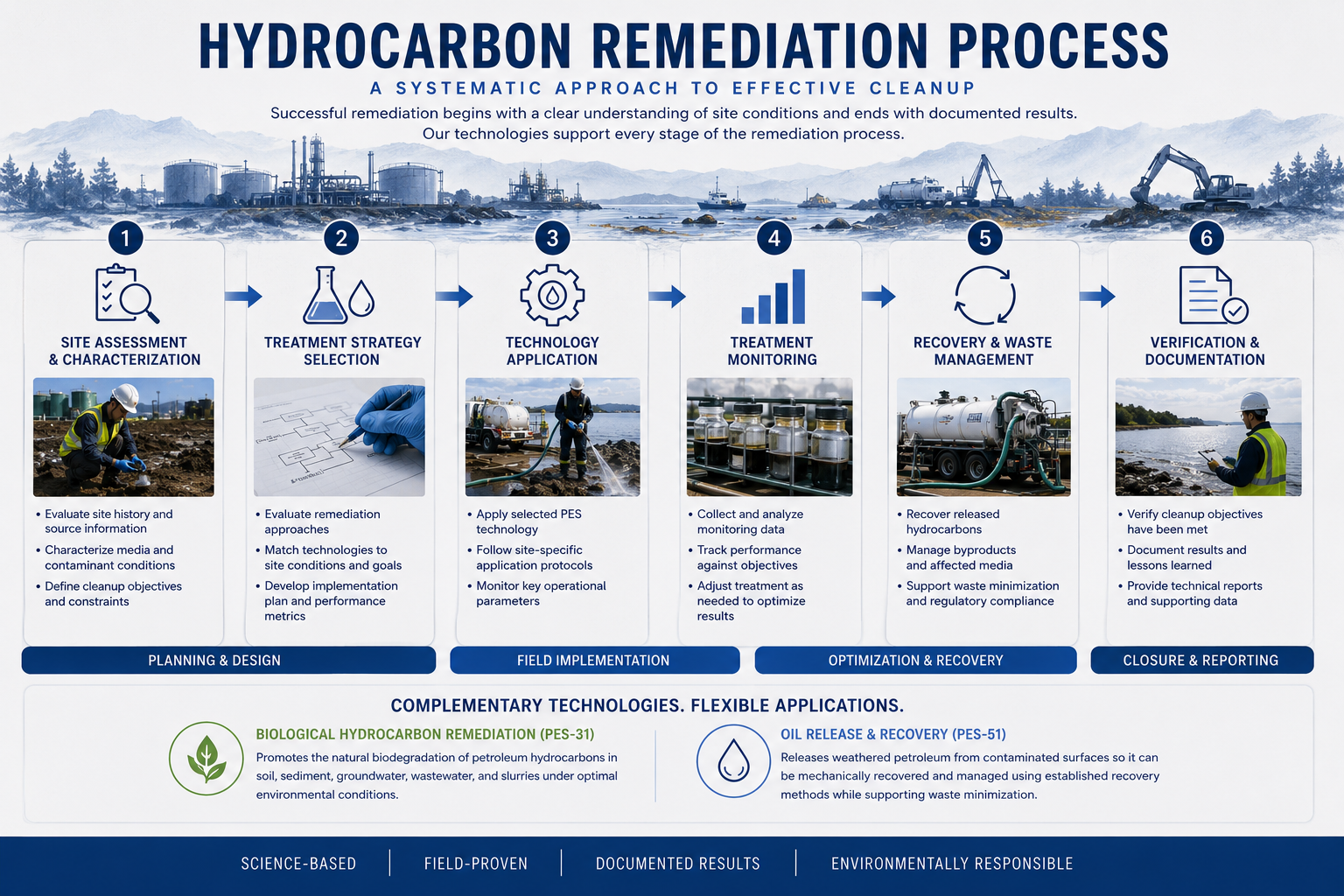
Hydrocarbon Remediation Process
Hydrocarbon remediation planning commonly moves from site assessment and technology selection through field application, recovery or biological treatment, performance monitoring, and project documentation. The specific workflow varies according to project conditions and regulatory requirements.
Additional Technical Information
Petroleum hydrocarbon remediation projects often require evaluation of contaminant characteristics, treatment objectives, environmental conditions, operational constraints, and regulatory considerations. Product information, application guidance, technical documentation, and published field references are available throughout this website to support that evaluation process.
Questions regarding specific applications, technical documentation, or product information may be directed to Practical Environmental Solutions.