
PES-31 Soil Bioremediation Application
Landfarming Bioremediation for Petroleum-Contaminated Soil
Landfarming bioremediation, also called land farming or land treatment, is a managed soil remediation method used for petroleum-contaminated soil. PES-31 supports landfarming programs by adding hydrocarbon-digesting microbial activity to treatment areas where soil is tilled, aerated, moisture-managed, and monitored over time.
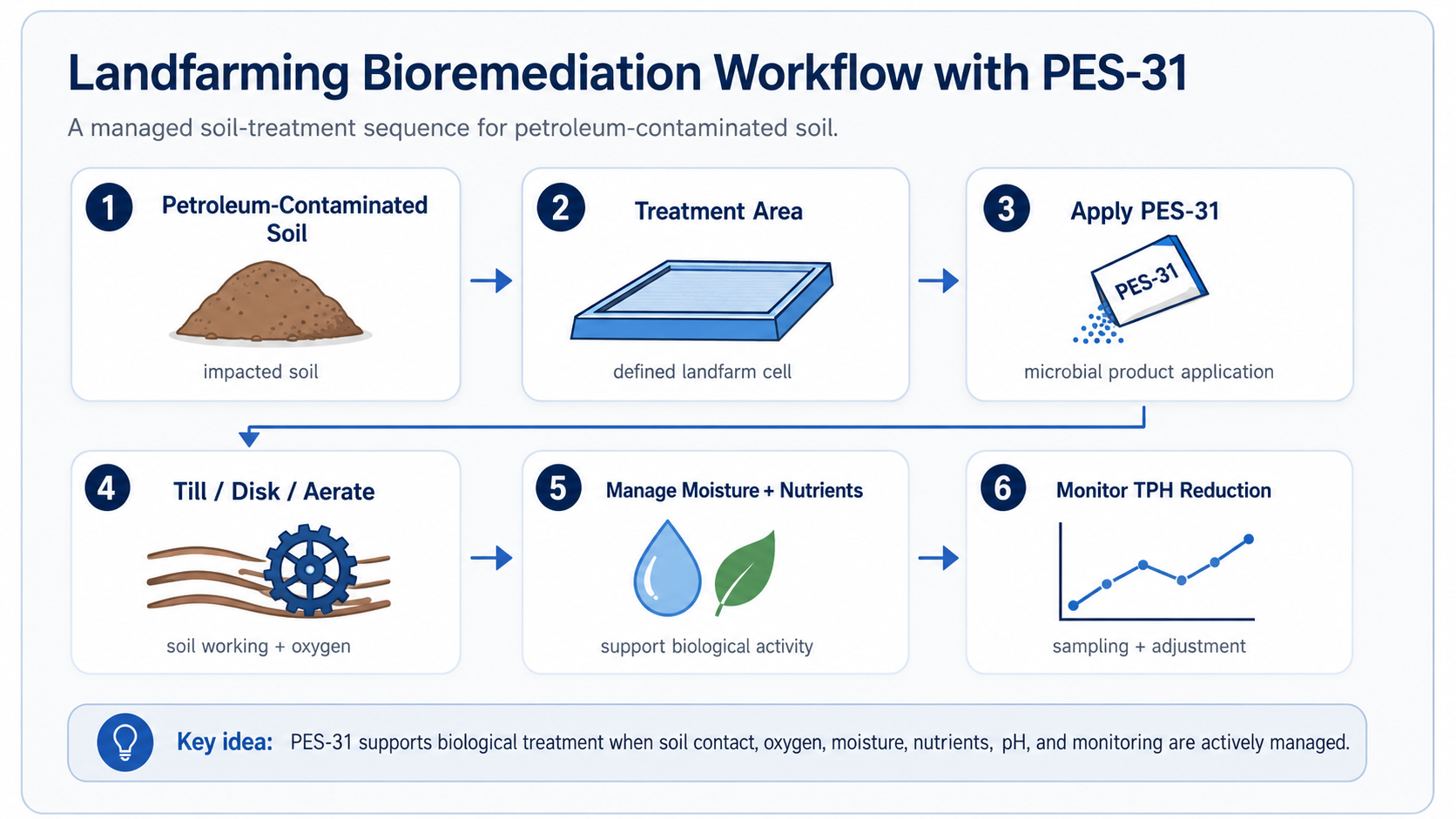
What Is Landfarming Bioremediation?
Landfarming is a soil treatment approach where petroleum-impacted soil is placed or managed in a controlled treatment area and worked over time to support aerobic biodegradation. Instead of relying only on excavation and disposal, landfarming uses soil handling, aeration, moisture control, nutrients, and biological activity to reduce petroleum hydrocarbon concentrations. In practice, landfarming may involve spreading contaminated soil in a treatment cell or managed area, applying microbial and nutrient support, tilling or disking the soil, and monitoring conditions as the biological process continues.
Why Landfarming Requires Active Management
Landfarming is not simply spreading contaminated soil and waiting. Treatment performance depends on whether the soil environment continues to support biological activity through oxygen, moisture, nutrients, pH, product distribution, and regular soil working.
Where PES-31 Fits
PES-31 is used in landfarming bioremediation programs where petroleum-contaminated soil can be treated through a managed biological process. It fits projects involving diesel, crude oil, waste oil, jet fuel, and related petroleum hydrocarbons where the soil can be accessed, worked, and maintained under conditions that support microbial activity. PES-31 is not a replacement for site planning, sampling, containment, or regulatory oversight. It is a field-applied microbial product designed to support hydrocarbon breakdown as part of a broader landfarming or soil-treatment program.
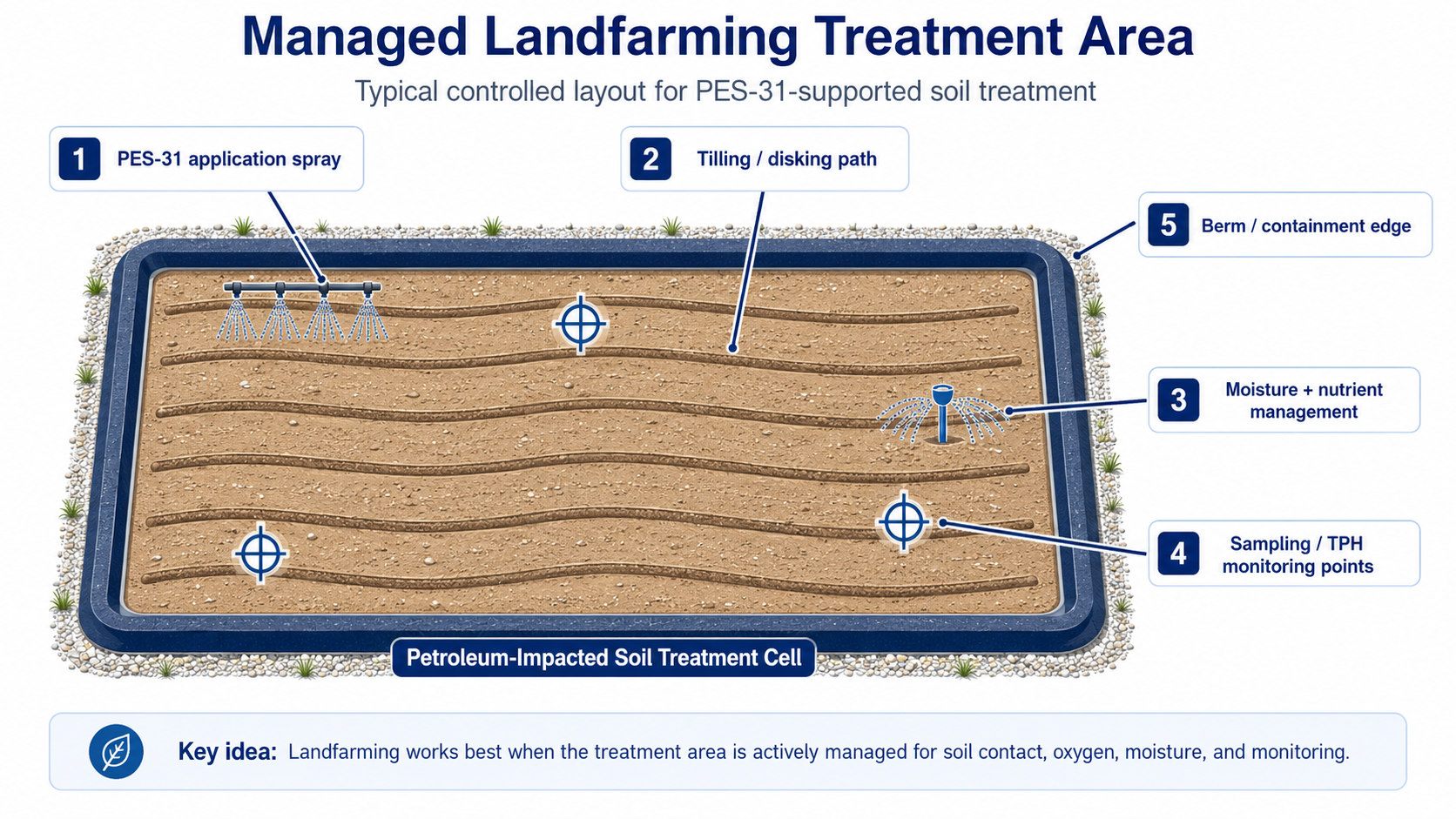
Managed Landfarming Treatment Area
How PES-31 Supports the Landfarming Process
Prepare the treatment area
Contaminated soil is placed or managed in a defined area suitable for controlled biological treatment. The treatment area should allow soil working, moisture management, and monitoring over time.
Apply PES-31 and work the soil
PES-31 is mixed thoroughly before use and applied to the petroleum-impacted soil. Water may be used to improve distribution and moisture conditions. Tilling, disking, or blending helps improve contact between PES-31 and the contaminated soil.
Maintain conditions and monitor progress
Moisture, oxygen, nutrients, and pH are managed over time to support continued microbial activity. Soil conditions and hydrocarbon levels can be monitored during the treatment period to determine whether additional working, moisture, nutrient support, or reapplication is appropriate.
Supported Landfarming Applications
PES-31 may be evaluated for landfarming and managed soil-treatment programs involving accessible petroleum-contaminated soil where the treatment area can be worked, aerated, moisture-managed, and monitored over time.
- Petroleum-contaminated soil
- Diesel-contaminated soil
- Crude oil impacted soil
- Waste oil soil contamination
- Jet fuel contaminated soil
- Treatment-cell soil bioremediation
- Production pit or petroleum pit soil treatment
- Managed soil treatment areas
- Field programs using tilling, disking, moisture control, and nutrient support
Why Teams Evaluate PES-31 for Landfarming
- Supports hydrocarbon bioremediation in managed soil treatment areas
- Can be used with tilling, disking, aeration, and moisture management
- Fits multiple petroleum contamination types, including diesel, crude oil, waste oil, and jet fuel
- Supports long-duration field remediation programs where soil conditions are monitored and adjusted
- Helps turn landfarming into an active treatment process instead of passive soil storage
- Connects directly with PES-31 case history data and related soil bioremediation applications
Landfarming Bioremediation FAQ
What is landfarming bioremediation?
Landfarming bioremediation is the managed treatment of contaminated soil through biological activity. For petroleum-contaminated soil, the process commonly uses aeration, tilling, moisture control, nutrients, and microbial activity to support hydrocarbon breakdown.
What kinds of contamination can PES-31 be used on in landfarming?
PES-31 can be evaluated for landfarming programs involving petroleum hydrocarbons such as diesel, crude oil, waste oil, jet fuel, and related oil-based contamination where soil can be accessed, worked, and maintained under conditions that support microbial activity.
How is PES-31 applied in a landfarming program?
PES-31 is mixed thoroughly before use and can be applied directly or mixed with water for better distribution. Soil working, such as tilling or disking, helps improve contact between PES-31 and the petroleum-contaminated soil.
What conditions matter most in landfarming treatment?
Moisture, oxygen, nutrients, suitable pH, and consistent soil working all matter. Landfarming works best when the treatment area is actively managed and monitored over time.
Review PES-31 Technical Information
For supporting details and related field examples, review the PES technical documents and case histories after exploring the main landfarming content.