
PES-31 Applications
Soil and Groundwater Remediation
Soil and groundwater remediation using PES-31 helps address petroleum-contaminated sites where hydrocarbons must be treated through practical field bioremediation methods.
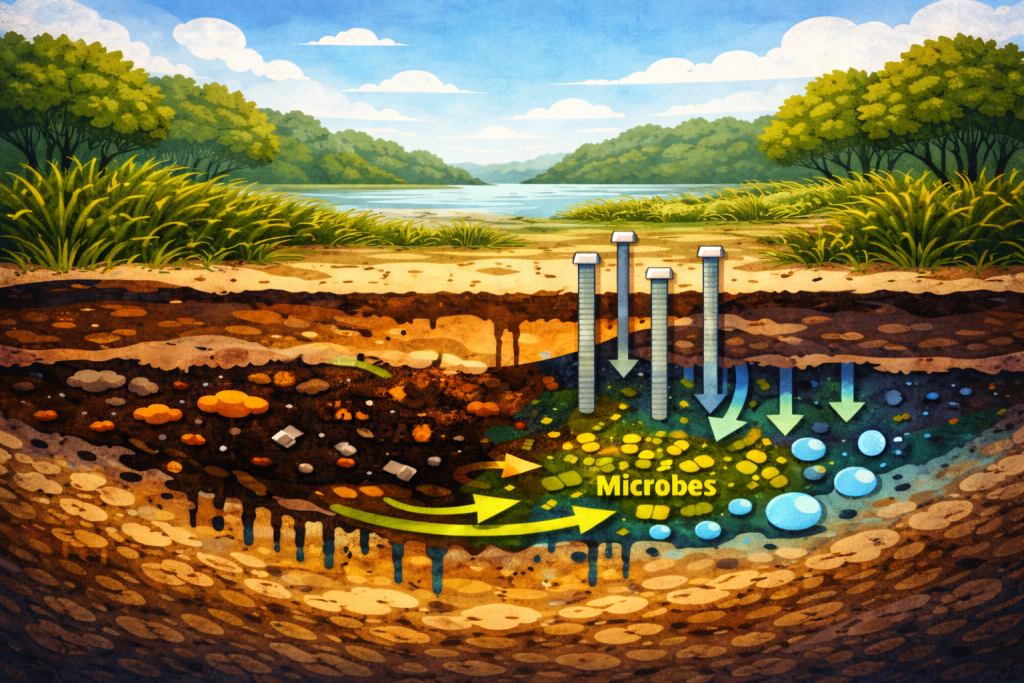
Where PES-31 Fits
PES-31 is used in soil and groundwater remediation where petroleum contamination affects the subsurface environment and cleanup must be managed through practical field treatment methods. It fits projects where soil impacts, treatment wells, recovered liquids, and related remediation activities are part of the overall site strategy.
Why Soil and Groundwater Cleanup Gets Complex
Petroleum contamination below the surface can be harder to manage than visible surface impacts. Soil conditions vary from one area of a site to another, groundwater movement can complicate treatment, and remediation often involves more than one contaminated zone or media type. Cleanup becomes even more challenging when the site must remain active, when contamination has migrated, or when treatment has to be maintained over time rather than handled as a one-time event.
How PES-31 Supports Soil and Groundwater Remediation
PES-31 is used where petroleum-contaminated soil and related treatment media must be addressed through biological remediation methods. It fits site programs that involve contaminated soil, groundwater-related recovery or treatment efforts, and field conditions where biological treatment is part of the broader remediation approach.
Subsurface Remediation Workflow Fit
Typical Site Conditions
PES-31 fits petroleum-contaminated sites involving impacted soil, treatment wells, recovered liquids, and related hydrocarbon-affected media. It can be used where diesel, waste oil, crude oil, jet fuel, and other petroleum hydrocarbons are part of the remediation problem.
Field Treatment Approach
Depending on the site and the remediation plan, PES-31 can be applied in field programs that involve direct application, water mixing for improved distribution, moisture management, nutrient support, and soil working where appropriate. In projects involving recovered liquids or treatment systems, application can be adapted to the type of contaminated media being managed.
Conditions That Support Progress
Soil and groundwater remediation programs work best when site conditions are actively managed. PES-31 guidance emphasizes the importance of oxygen, moisture, nutrients, and suitable pH conditions for biological treatment. Effective programs may also involve monitoring, repeated application, and site-specific adjustments as remediation progresses.
Supported Soil and Groundwater Remediation Applications
PES-51 fits a range of industrial cleaning situations, including tank cleaning, refinery maintenance and cleaning, loading rack cleanup, railroad fueling yard cleanup, equipment degreasing, parking lot and staging area cleaning, ship and barge cleaning, and containment pond or sump cleaning.
- Petroleum-contaminated soil remediation
- Groundwater-related remediation support
- Treatment well applications
- Recovered liquid treatment
- Diesel-contaminated site remediation
- Waste oil site cleanup
- Crude oil impacted site treatment
- Jet fuel contamination treatment
- Field-managed hydrocarbon bioremediation
- Subsurface petroleum remediation programs
Why Teams Evaluate PES-31 for Subsurface Cleanup
- Fits petroleum-contaminated sites with mixed subsurface conditions
- Supports practical field remediation methods
- Useful where soil impacts and groundwater-related treatment overlap
- Can be integrated into longer-term site cleanup programs
- Applicable across multiple petroleum contamination types
Soil and Groundwater Remediation FAQ
What types of sites can PES-31 be used on?
PES-31 can be used on petroleum-contaminated sites involving impacted soil, treatment wells, recovered liquids, and related groundwater-remediation activities where biological treatment is part of the cleanup strategy.
Can PES-31 be used when groundwater is part of the site problem?
Yes. PES-31 fits remediation programs where groundwater-related treatment activities are part of the overall site conditions, especially when petroleum contamination affects more than one part of the subsurface environment.
What kinds of hydrocarbons can PES-31 be used on?
PES-31 can be used in applications involving diesel, waste oil, crude oil, jet fuel, and other petroleum hydrocarbons where bioremediation is the appropriate cleanup method.
What treatment conditions matter most?
Oxygen, moisture, nutrients, and suitable pH conditions all matter. Site monitoring and field adjustments may also be important as remediation progresses.
Review PES-31 Technical Information
For additional application guidance and field-use examples tied to subsurface cleanup, review the PES technical documents and case histories.